Virtual Production System Integrator
ELimpia designs, integrates and supports technical infrastructures for virtual production studios based on chroma key and LED volume, with camera tracking and real-time rendering for broadcast and cinema workflows.
Our work starts from the way the studio has to operate in production. Before choosing individual technologies, we analyze the space, cameras, lenses, tracking, video signals and control room operation. From this analysis, we design a coherent pipeline where every component works together with the others, instead of behaving like an isolated system.
A chroma key studio, an LED volume for ICVFX, a live production or an XR workflow all have very different technical requirements. That is why ELimpia can follow the project from system design to installation, from lens calibration to team training, or work on existing systems to improve accuracy, reliability and final image quality.
LED volume for ICVFX and XR with set extension and AR
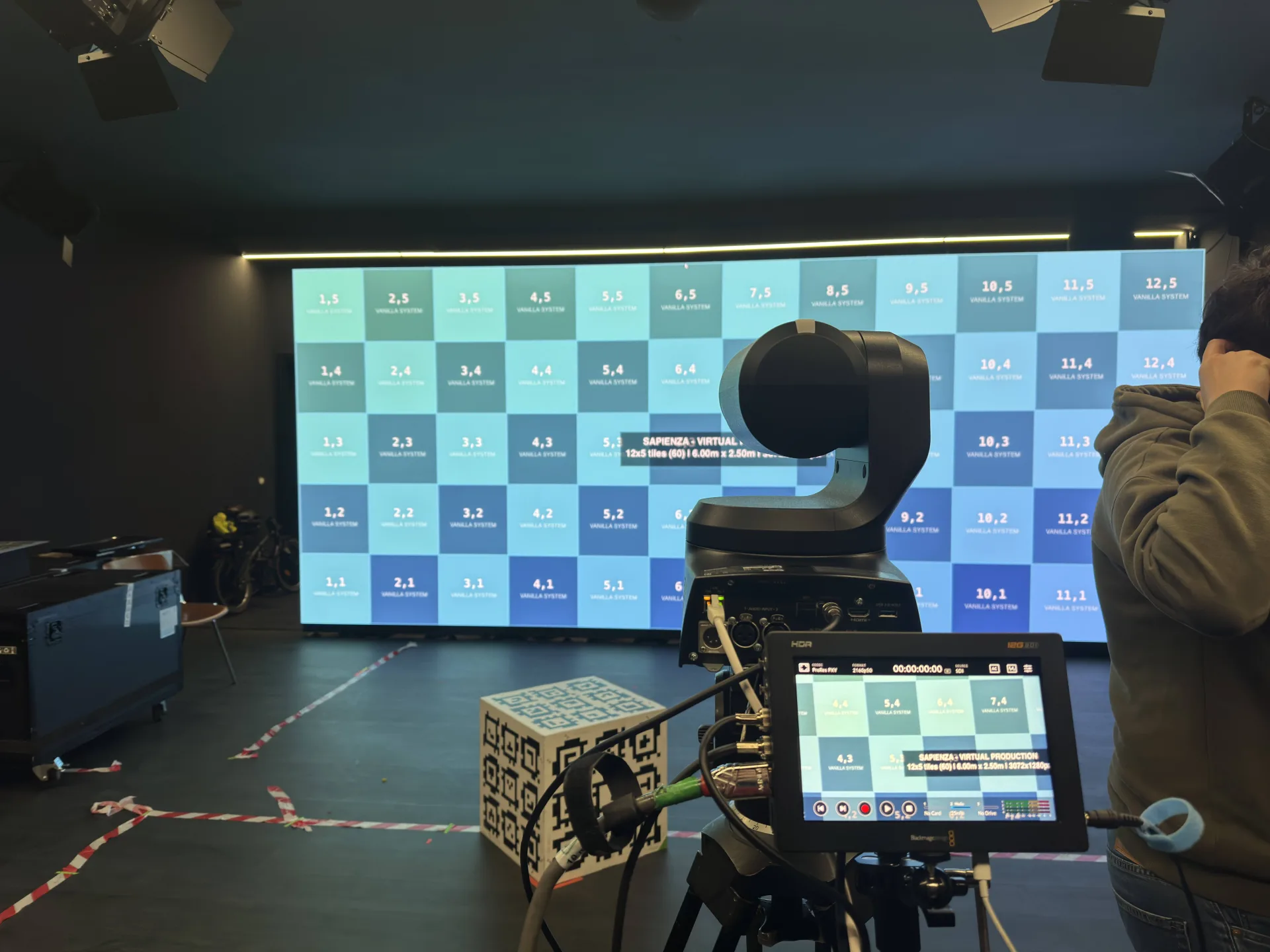
Inside an LED volume, virtual production is not simply a digital background displayed on large screens. It is a system where the physical camera, the virtual camera, Unreal Engine content, LED processing, camera tracking, lenses and lighting must remain coherent with each other.
In ICVFX workflows, the inner frustum follows the perspective of the physical camera, while the outer frustum contributes to lighting, reflections and visual continuity on set. When this relationship works correctly, the virtual environment becomes believable directly in camera and reduces the need to rebuild the image in post-production.
ELimpia designs and integrates virtual production systems on LED volume for ICVFX, XR, set extension, broadcast studios, corporate studios and live production. The design takes into account camera distance, pixel pitch, how the LED panels behave with the camera shutter, color calibration and the relationship between physical light and virtual content.
In XR and set extension workflows, the LED volume can be only one part of the final image. The content can extend beyond the physical LED surface through AR elements and real-time compositing. To achieve a believable result, the system needs accurate tracking data, stable sync and careful calibration between camera, engine, LED volume and control room.
Chroma Key
for VR and AR
Chroma key remains one of the most flexible workflows for virtual production, broadcast, corporate studios, advertising and live production. But a professional chroma key system is not defined only by an evenly lit green background.
The final result comes from the relationship between lighting, camera tracking, lenses, keying and live compositing. If the keying is not coherent with the physical camera, if the lens is not calibrated or if spill is not under control, even a good rendering engine can produce an image that does not feel believable.
ELimpia designs and integrates chroma key workflows for real-time 3D environments, virtual studios and live productions. We can work with software or hardware keyers, internal or external key pipelines, SDI/IP signals and operational previews in the control room, so the system can actually be used during production.
Lighting consulting for chroma key, LED volume and hybrid workflows
Virtual production is not only a matter of technology. The final image comes from the relationship between technical infrastructure, cinematography, virtual content and the way people work on set.
That is why ELimpia can support studios and productions with Directors of Photography specialized in virtual production, designing lighting setups for chroma key, LED volume and hybrid workflows. In chroma key, the goal is to separate subject and background correctly, controlling spill, shadows and key readability. In an LED volume, the light generated by the panels becomes part of the real photography and must work together with the physical lighting on set.
A system can be correct on paper, but if the lighting does not work, the final image will not be believable in camera.
Camera tracking, tracking data and camera movement
Camera tracking is not only about receiving position data. In a virtual production pipeline, that data must drive a virtual camera that remains coherent with the physical camera. This means checking axes, scale, world origin, delay, synchronization and lens behavior inside the rendering engine.
ELimpia integrates optical, mechanical/encoded tracking systems for cranes, dollies, sliders and remote heads, as well as SLAM, PTZ and robotic systems.
The goal is to transfer the real camera movement into the digital scene in a stable and accurate way. When tracking is configured correctly, virtual perspective, parallax and compositing update in real time, allowing the camera to move through the physical space while remaining coherent with the digital environment.
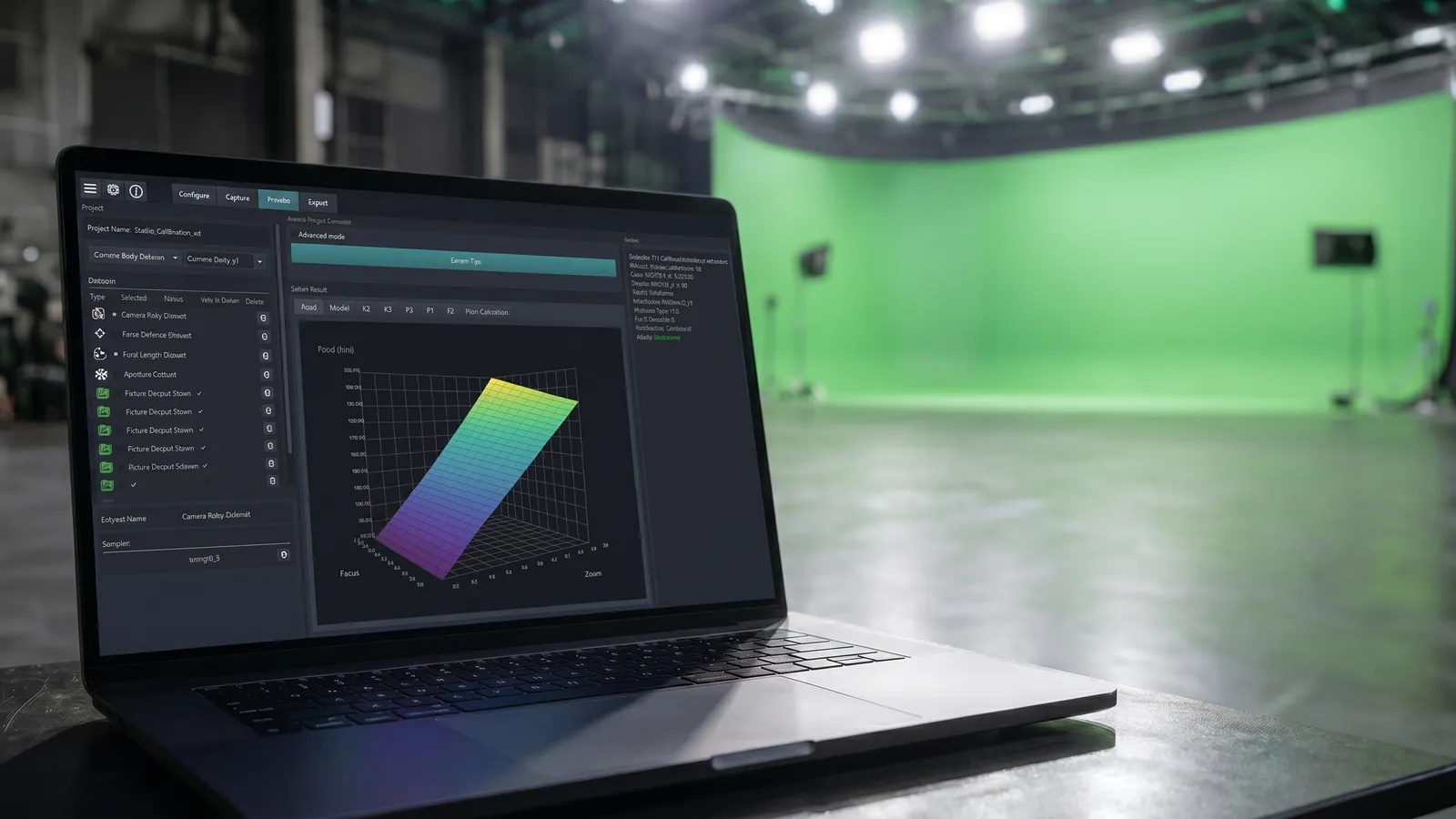
Lens calibration, nodal offset and real-to-virtual camera alignment
Tracking can be stable, but without accurate lens calibration, CG can slide, perspective can become inconsistent and virtual objects may not remain locked to the real set.
ELimpia calibrates lens distortion, nodal offset, center shift and field of view on prime and zoom lenses, calibrating multiple zoom and focus points in order to reproduce focus breathing as well.
The goal is to make the physical camera and the virtual camera describe the same perspective, both in chroma key workflows and on LED volume for ICVFX and XR.
Integration with broadcast, live production and control room workflows
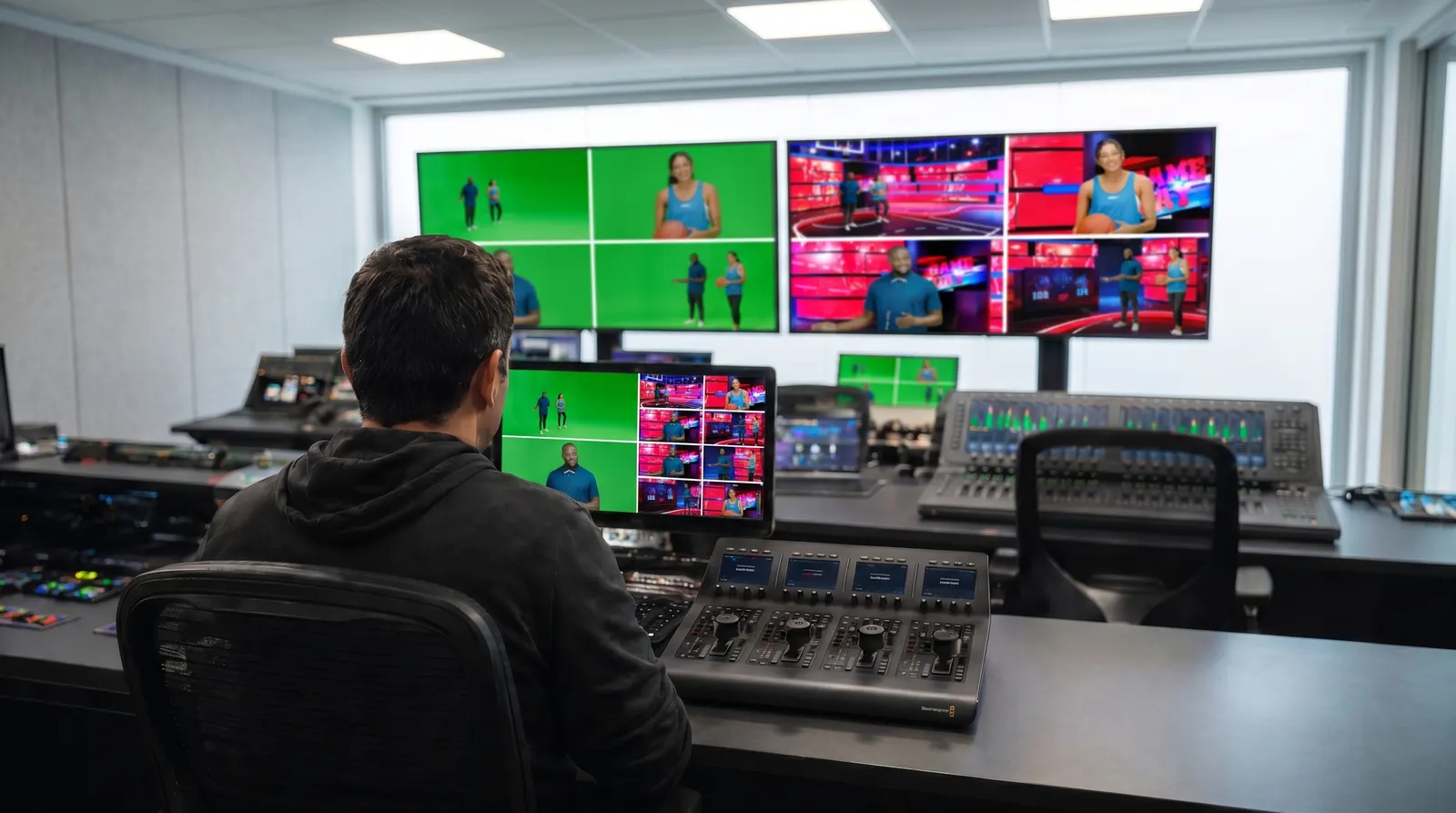
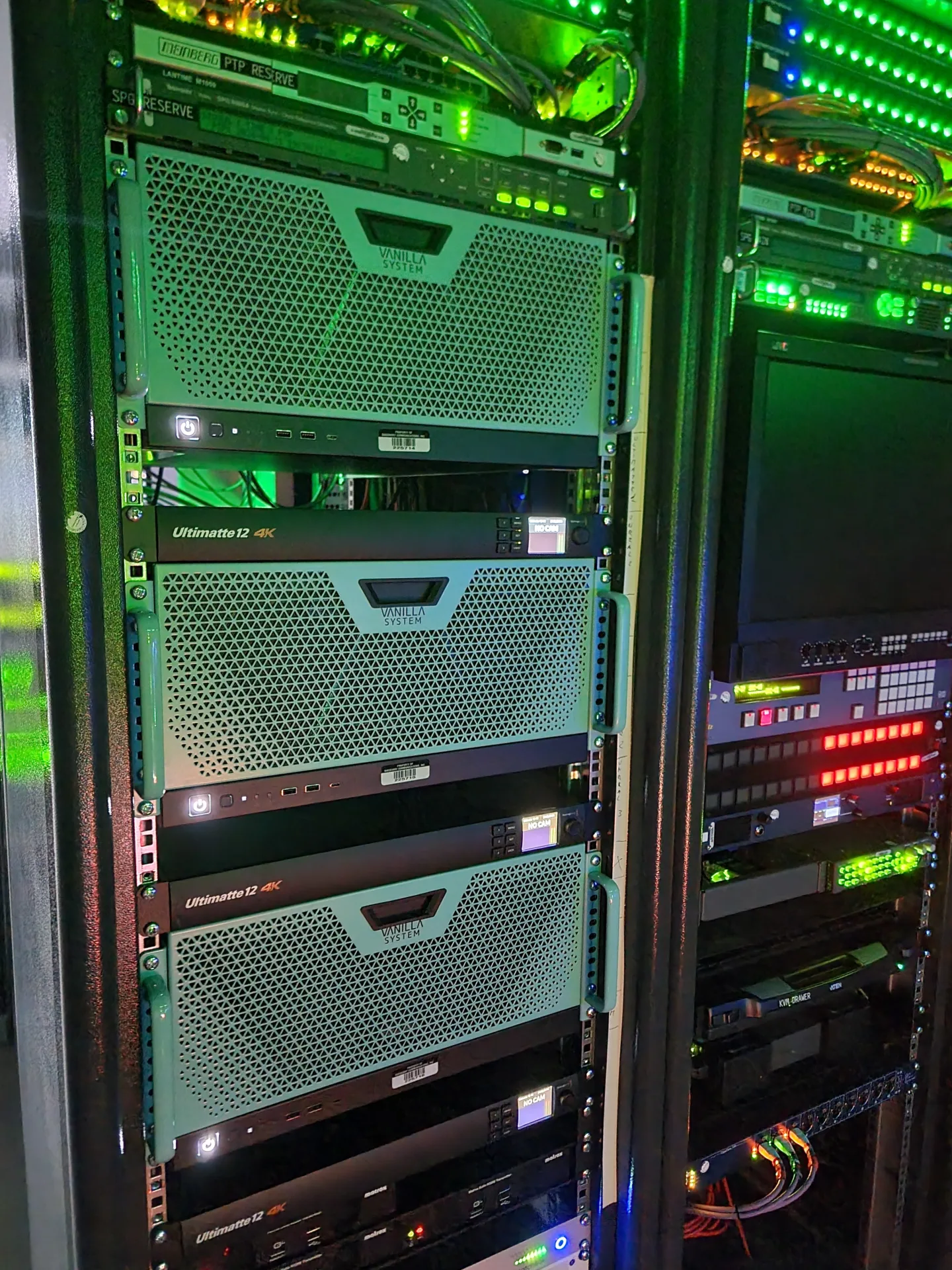
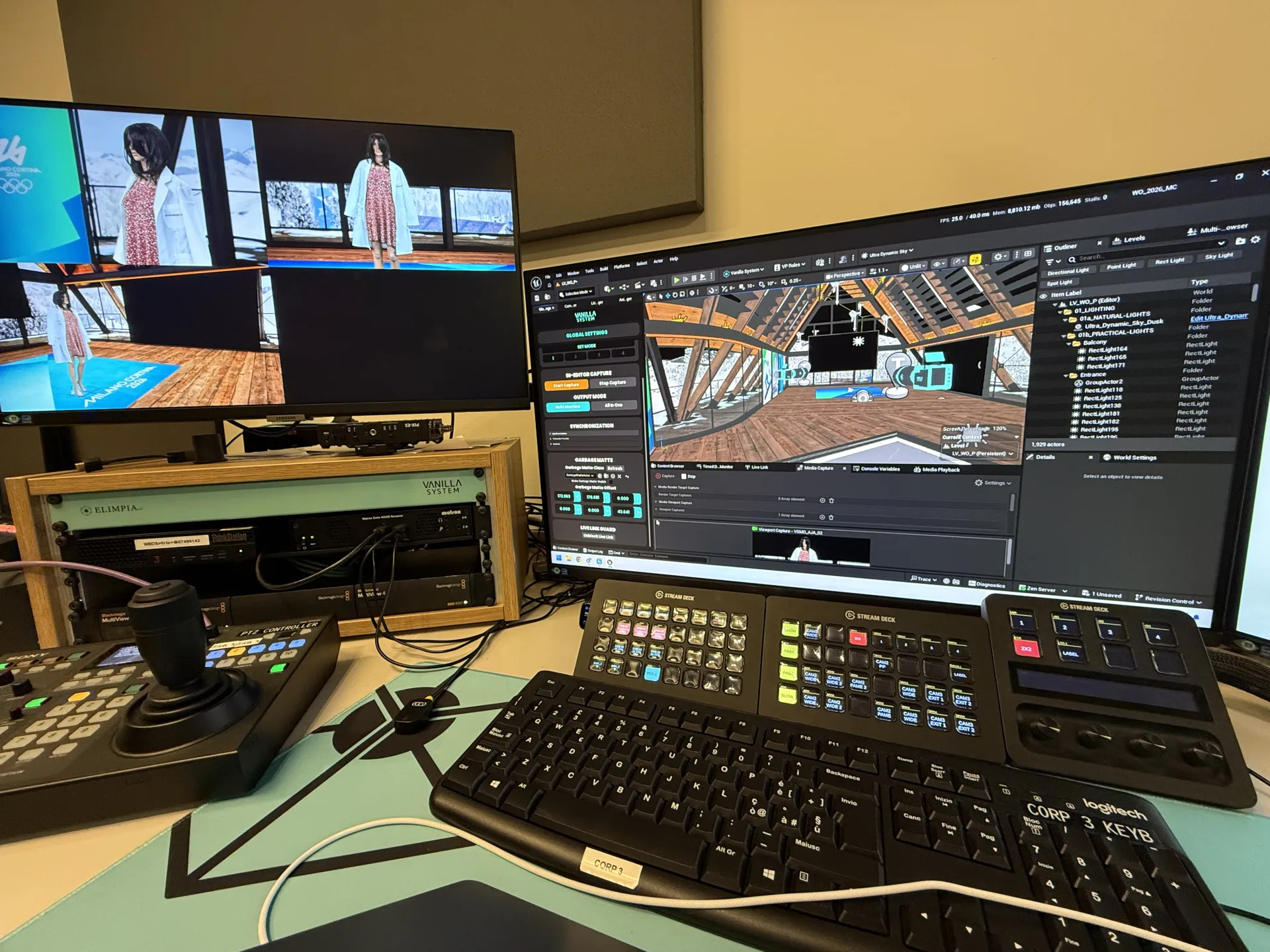
A virtual production studio must work inside a real production pipeline. That is why ELimpia connects the real-time layer with the broadcast and live production environment, making Unreal Engine, media servers, graphics workstations and video I/O communicate with the existing control room and technical infrastructure.
SDI/IP routing, genlock, timecode, keyers and multiview should not remain separate elements outside the production. They need to become part of a clear and predefined workflow.
The technology must be accurate, but it also has to be usable by operators during a real production, with a working method that is simple to repeat and control.
Installation, training and support for third-party systems
ELimpia does not work only on proprietary installations. We can also work on third-party systems that are already installed, when a studio already owns cameras, tracking systems, LED walls, workstations, real-time software or broadcast equipment, but still struggles to achieve a stable and repeatable workflow.
In these cases, we analyze the existing pipeline and identify where the system is losing reliability.
Sometimes the solution is to correct a technical configuration. Other times, the workflow itself needs to be reviewed, or the operators need more specific training. The value is not to force a single platform, but to make the right system work for the project.
Professional technologies and relationships with leading industry brands
Over time, we have built distribution, collaboration and support relationships with brands specialized in virtual production, camera tracking, camera supports, robotic systems, LED volume and real-time software.
This allows us to design solutions that fit the project, without being tied to a single product or platform. Every studio has different limits, budgets and goals: the right technology is the one that integrates best with the real production workflow.
Our value is to choose, integrate and support professional tools that can work together reliably, from the set to the control room.
Related case studies

Virtual Production
Vanilla System virtual production studio for academies
ACOF + COSMO
Read case study →
Virtual Production
ICVFX stage on LED volume with Vanilla System
Sapienza Università di Roma
Read case study →
Virtual Production
Multi-machine studio with Vanilla System
Warner Bros. Discovery
Read case study →
Virtual Production
Olympic Games virtual production with Vanilla System
Eurosport
Read case study →

Let's talk about your virtual production studio
Whether you are designing a new studio, upgrading an existing infrastructure or preparing a specific production, we can help you define the right architecture and bring the system to a truly operational level.
Tell us about your space, the workflow you want to achieve or the technical problem you need to solve. We will help you understand how to connect cameras, tracking, real-time content, video signals, lighting and control room operation into a stable production-ready pipeline.